Managing money can feel overwhelming, especially when you’re juggling bills, groceries, kids, and everything else life throws your way. The good news? Budgeting doesn’t have to be complicated.
One of the simplest budgeting methods is the 50/30/20 budgeting rule — a framework that helps you balance everyday expenses, lifestyle spending, and long-term financial security.
Instead of tracking dozens of complicated categories, this method divides your income into three clear spending buckets that make financial planning much easier.
Let’s break it down.
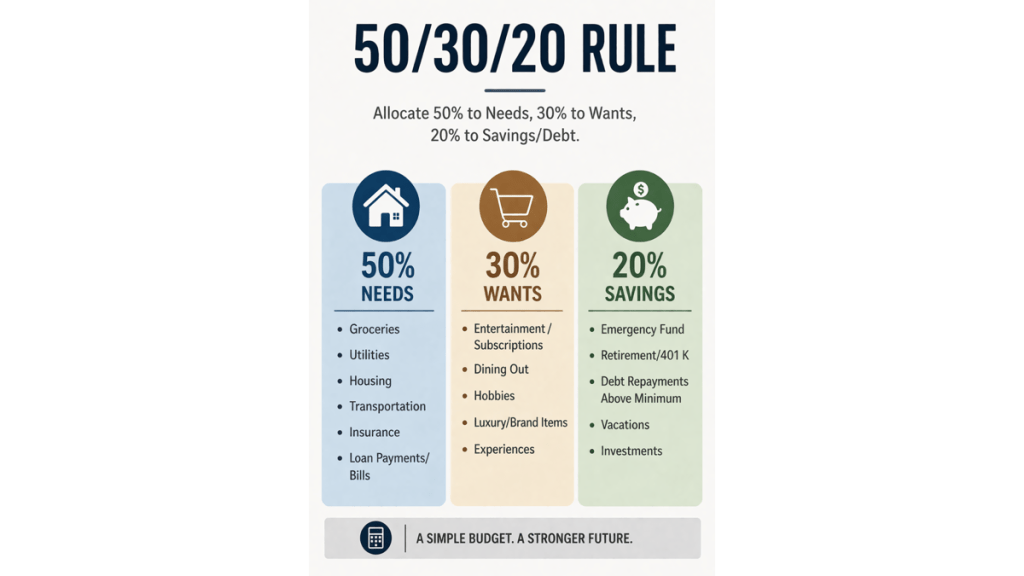
What Is the 50/30/20 Budget Rule?The 50/30/20 rule suggests allocating your income like this:
• 50% for Needs
• 30% for Wants
• 20% for Savings and Debt Reduction
This simple structure helps ensure your essential expenses are covered while still leaving room for enjoyment and financial progress.

50% — Needs
Needs are the essential expenses required to live and function day-to-day. These are the bills you must pay to maintain your household and basic lifestyle.
Examples of needs include:
• Housing (rent or mortgage)
• Groceries
• Utilities
• Transportation (fuel, car payments, public transit)
• Insurance (health, home, auto)
• Loan payments and monthly bills
Ideally, about half of your take-home income should go toward these necessary expenses.
If your needs exceed 50%, you may want to look for areas where you can lower costs, such as refinancing loans, reducing energy usage, or meal planning to cut grocery spending.
30% — Wants
Wants are non-essential lifestyle purchases that make life enjoyable but aren’t necessary for survival.
Examples include:
• Dining out
• Entertainment and streaming subscriptions
• Hobbies
• Travel and experiences
• Luxury or brand-name items
This category allows you to enjoy your money without guilt while still keeping spending under control.
Many people overspend in this category without realizing it, which is why reviewing your spending habits can be so eye-opening.
20% — Savings & Debt Reduction
The final portion of your budget should go toward building financial security and reducing debt.
Examples include:
• Emergency fund contributions
• Retirement savings or 401(k)
• Investments
• Saving for vacations
• Extra payments toward debt
This 20% portion is what helps you create financial stability and prepare for the future.
Even small contributions can add up significantly over time.
How to Start Using the 50/30/20 Rule
Getting started with this budgeting method is simple. Follow these steps:
1. Calculate Your Take-Home Pay
Your take-home pay (net income) is the money you receive after taxes and deductions.
You can calculate it like this:
Gross Pay – Taxes – Deductions = Net Pay
Steps to determine your net income:
• Start with your gross pay, which is your total earnings before anything is taken out.
• Subtract pre-tax deductions, such as health insurance premiums, flexible spending accounts, or 401(k) contributions.
• Subtract FICA taxes and income taxes.
• Subtract post-tax deductions, such as life insurance premiums or union fees.
The final amount is the income you actually have available to budget.

2. Review Your Current Spending
Look at your bank statements or budgeting app to see where your money currently goes.
Categorize your spending into:
• Needs
• Wants
• Savings and debt payments
This step often reveals spending habits you might not have noticed before.
3. Adjust Your Spending
Once you know where your money is going, you can adjust your spending to better fit the 50/30/20 structure.
This might mean:
• Cutting back on subscriptions
• Cooking at home more often
• Finding ways to reduce monthly bills
• Increasing savings contributions
Small adjustments can make a big difference over time.
Why the 50/30/20 Budget Works
The reason this budgeting method is so popular is because it is simple, flexible, and realistic.
It helps you:
✔ Reduce unnecessary spending
✔ Pay off debt faster
✔ Build an emergency fund
✔ Save for long-term goals
✔ Enjoy your money without guilt
For many families, having a clear structure removes the stress from budgeting.

Final Thoughts
Saving money and managing your finances doesn’t have to be complicated. Sometimes the most effective systems are the simplest ones.
The 50/30/20 rule is a great starting point for anyone who wants to take control of their finances without feeling overwhelmed by detailed budgeting spreadsheets.
If you’re looking for a practical way to balance spending, saving, and enjoying life, this framework is a great place to start.
✨ Remember: Progress matters more than perfection. Even small changes in how you manage your money can lead to big financial improvements over time.





 The Thrifty Thriver
Leave a comment